
The Kirby Vacuum Cleaner Bags
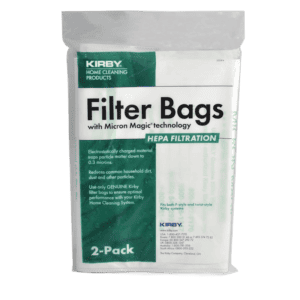
The Kirby vacuum cleaner bags form an essential part of the complete filtration system, because they not only collect dirt but also contribute to a constant airflow at the same time. In addition, these bags ensure that both larger debris and microscopic dust are effectively separated from the exhaust air. As a result, the vacuum cleaner continues to perform powerfully, while the air quality inside the home noticeably improves.
The Kirby vacuum cleaner bags and the operation of the filtration system
The Kirby vacuum cleaner bags are primarily designed as the main collection layer within the overall filtration system. Furthermore, air is drawn in through a powerful pump, after which the bag retains coarse dirt while allowing air to pass through in a controlled manner. This creates an efficient balance between suction power and filtration, which in turn ensures stable performance during prolonged use.
Moreover, the position of the bag plays an important role, because it is located directly within the airflow path. When the system functions properly, fine dust particles largely remain trapped in the filtration section. As a result, contaminated air is prevented from being released back into the room.
The Vacuum Cleaner Bags: Construction and Airflow
The airflow inside The Kirby vacuum cleaner bags is directed in such a way that dirt particles accumulate in layers, while the air passage remains open. In addition, this construction ensures that the motor experiences less resistance, allowing performance to remain stable.
Furthermore, larger debris such as hair and crumbs is immediately captured in the first filtration layers. Subsequently, smaller particles adhere to the finer fiber structure, keeping the exhaust air significantly cleaner. As a result, an efficient system is created that is suitable for intensive household use.
Regular Bags Versus HEPA Filtration Systems
Regular vacuum cleaner bags, often made from paper or simple microfiber materials, mainly retain larger debris. However, these bags generally allow the finest particles, such as pollen and dust mite waste, to pass through. As a result, these allergens can still end up in the air.
In contrast to these basic solutions, advanced systems combine multiple levels of filtration. Consequently, not only is dirt retained inside the bag, but the air is also additionally filtered through supplementary technologies.
HEPA 11 Inside The Vacuum Cleaner Bags
The Kirby vacuum cleaner bags often make use of HEPA 11 classification, which means that at least 95% of particles down to 0.3 microns are captured. As a result, fine dust, pollen, and other microscopic contaminants are filtered effectively.
In addition, this type of bag consists of multilayer synthetic microfibers that receive an electrostatic charge during production. Consequently, the fibers act like a magnet, trapping dust particles. At the same time, the airflow remains optimal while filtration quality stays high.
Furthermore, Micron Magic Plus variants frequently belong to this category, making them particularly suitable for people with allergies or sensitive airways.
Read here: Everything About Kirby Vacuum Cleaner Bags – Your Guide to Clean Air and Maximum Suction Power
The Kirby Vacuum Cleaner Bags: Material and Microfiber Technology
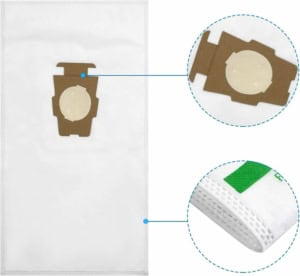
The construction of The Kirby vacuum cleaner bags is based on non-woven fleece material consisting of multiple layers of polypropylene and polyester. As a result, a strong yet breathable structure is created that is suitable for heavy-duty use.
Moreover, this layered construction ensures that dirt is not retained at a single point only, but instead spreads throughout the entire bag. Consequently, the system becomes clogged less quickly and suction power remains consistent for a longer period.
In addition, durability plays an important role because synthetic materials are more resistant to tearing than traditional paper bags. Therefore, the risk of leakage is significantly reduced.
Electrostatic Function and Layer Structure
The performance of The Kirby vacuum cleaner bags is enhanced by an electrostatic charge within the fibers. As a result, microscopic particles are attracted and retained, even when airflow remains strong.
Furthermore, the labyrinth structure of the fibers ensures that dust particles are trapped multiple times while passing through the bag. Subsequently, only filtered air is allowed through, contributing to a cleaner living environment.
In addition, this technology prevents fine allergens from being released back into the room, which is especially important in households with allergy-sensitive residents.
The Kirby Vacuum Cleaner Bags: Usage, Replacement, and Compatibility
The Kirby vacuum cleaner bags are nowadays often equipped with a universal connection, making them suitable for virtually all Kirby models. As a result, both older and newer systems can easily be fitted with the same type of bag.
In addition, installation remains simple because the connection is designed for quick placement without additional adjustments. Consequently, maintenance becomes user-friendly and efficient.
The Kirby Vacuum Cleaner Bags and Allergy Prevention in Practice
When The Kirby vacuum cleaner bags are used correctly, they can help reduce allergens in the home. However, improper use, such as an overfilled bag or a damaged seal, can actually have the opposite effect.
Therefore, it is important to replace the bag in time, preferably once it is approximately two-thirds full. This prevents pressure buildup from causing fine dust leakage along the edges of the system.
In addition, imitation paper bags are best avoided because they often provide insufficient filtration and tear more easily under high suction power.
Furthermore, when cleaning mattresses and carpets, it is especially important to use high-quality bags because the concentration of dust mites is generally highest there. As a result, the effectiveness of the Kirby vacuum cleaner is maximized during everyday cleaning.